Resistance Bands 101: A Simple Way to Get Stronger Anywhere
Looking for an easy and affordable way to transform your fitness routine? You’re in luck because staying active and building strength doesn’t require you to lift heavy weights at the gym, or even go to the gym in general. What’s the alternative? Resistance bands!
Resistance bands are great for anyone, whether you’re just starting out, always on the move, or looking for a cheap workout option. They’re easy to carry, affordable, and super versatile. In this guide, we’ll cover everything you need to know to start using resistance bands, from picking the right type to learning key exercises.
Key Takeaways
- Resistance bands provide a versatile and affordable way to strengthen muscles anywhere.
- They come in different types and resistance levels, allowing for a wide range of exercises.
- A well-balanced routine should include upper body, lower body, and core exercises.
- Focusing on proper form and progression will help you get the most out of your workouts.
- With consistency, resistance bands can help you build strength, flexibility, and endurance over time.
So, grab your resistance bands and get started – you’ll be surprised at how effective they can be in helping you reach your fitness goals!
What Are Resistance Bands?
Resistance bands are elastic bands used for strength training and rehabilitation exercises. They provide resistance when stretched, challenging your muscles in a way that mimics weight training. Unlike dumbbells or barbells, bands create continuous tension throughout the movement, activating stabilizing muscles and improving strength in a functional way.
Quick Recommendation: When it comes down to it, choosing which set of resistance bands to buy can get confusing given how many brands and types there are. One set that I would recommend is HPYGN Resistance Band set. The standard set goes up to 150lbs of resistance but there are sets with more resistance available as well.
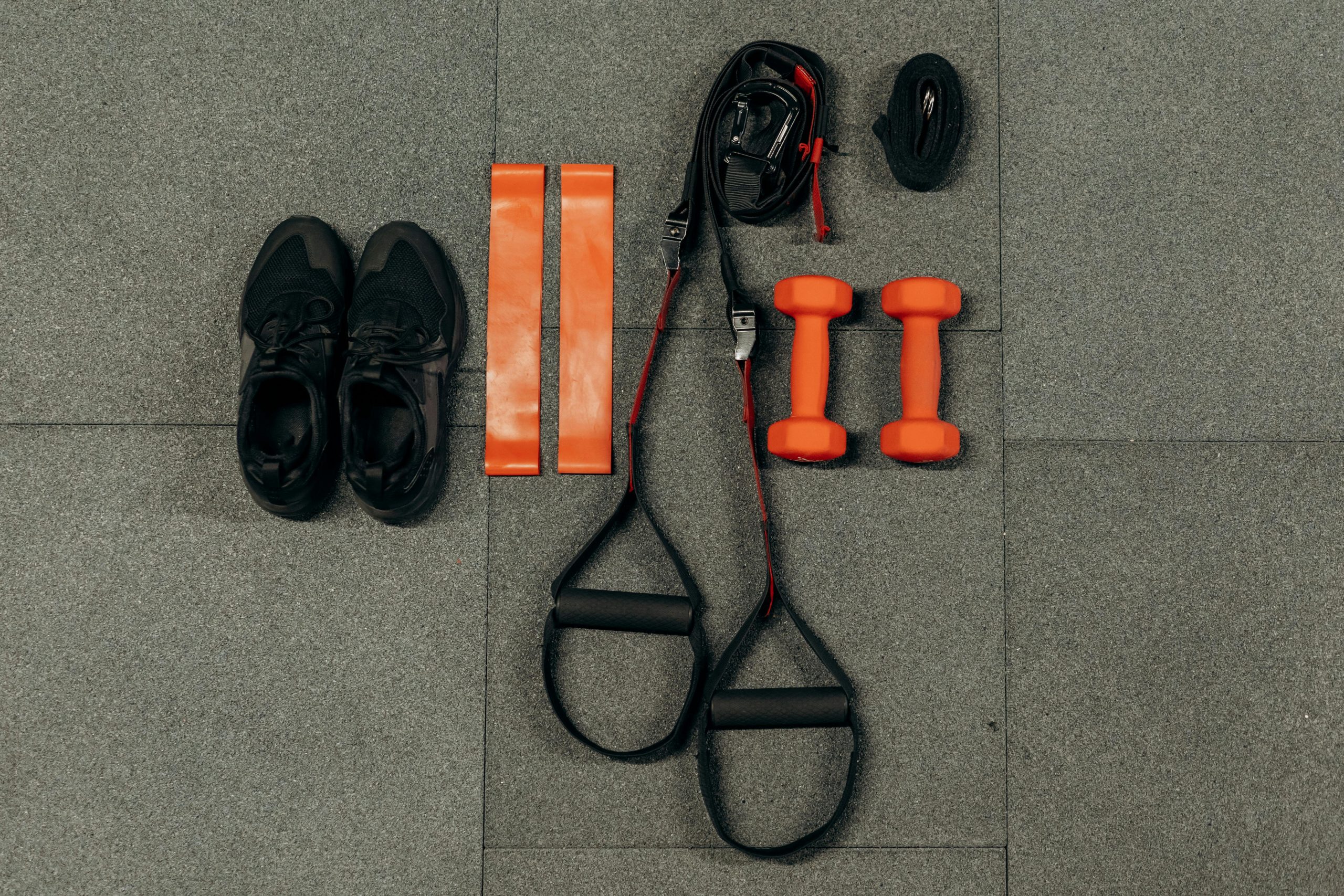
Originally developed for physical therapy and rehabilitation purposes, resistance bands have evolved into a staple in fitness routines for people of all levels. They are made from durable rubber, latex, or fabric materials, offering different levels of resistance to suit various training needs. Some bands come with handles, while others are simple loops or long, flat strips that can be adjusted for different exercises.
One of the standout features of resistance bands is their ability to provide variable resistance. Unlike free weights, where the resistance remains constant throughout the movement, bands create increasing resistance as they are stretched. This means your muscles must work harder at the peak of the movement, leading to better muscle activation and growth.
Resistance bands can be used in numerous ways, including:
- Strength training for building muscle and endurance
- Warm-up and activation drills to prepare the body for exercise
- Injury prevention and rehabilitation for safe recovery
- Mobility and flexibility exercises to enhance range of motion
- Assistance with bodyweight exercises such as pull-ups and dips
(SWIMA can help you remember the main ways resistance bands can be utilized.)
Because of their versatility and effectiveness, resistance bands are a great alternative, or even a complement, to traditional weightlifting. Whether you want to build strength, improve athletic performance, or recover from an injury, resistance bands offer a safe and efficient way to achieve your fitness goals.
Types of Resistance Bands
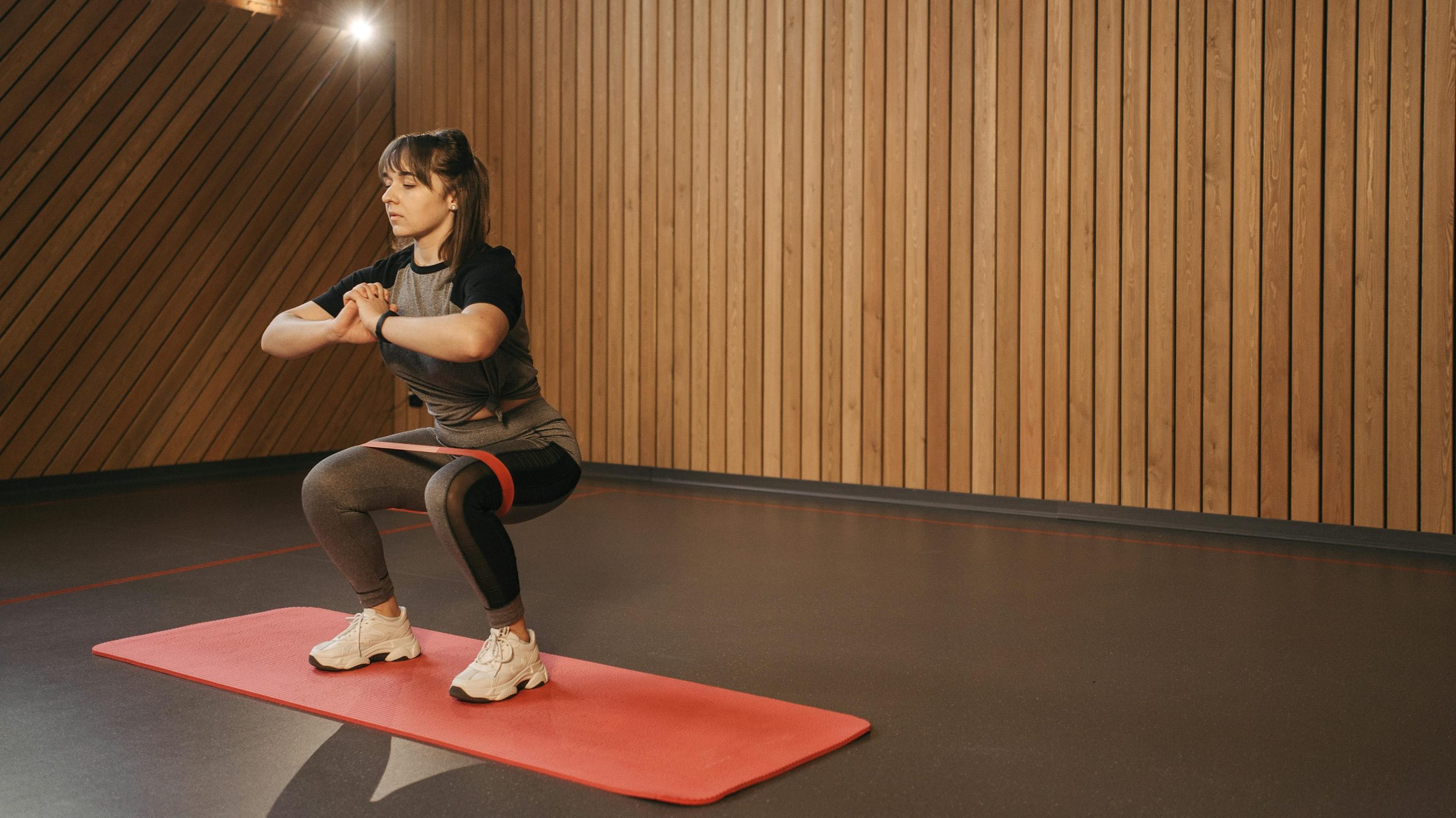
- Loop Bands – Continuous circular bands, perfect for lower body exercises like squats and glute bridges.
- Tube Bands with Handles – Bands with handles on both ends, great for upper body exercises like bicep curls and shoulder presses.
- Figure-8 Bands – Shorter bands shaped like an “8,” useful for chest and arm workouts.
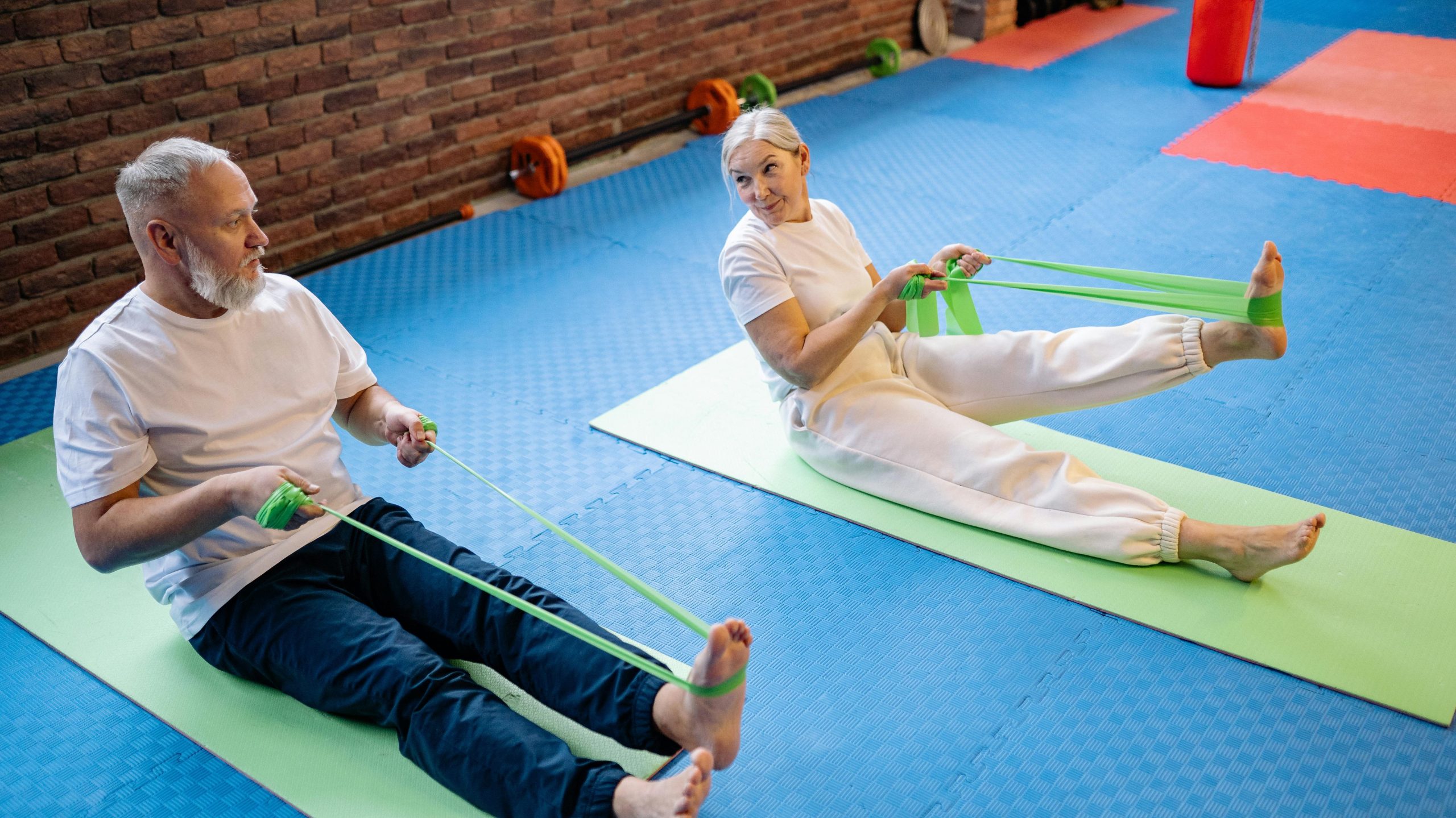
- Therapy Bands – Flat, ribbon-like bands often used for physical therapy and mobility work.
- Fabric Bands – A non-slip option, often used for lower-body workouts to provide extra resistance without rolling up.
Benefits of Using Resistance Bands
Why should you use resistance bands in your workouts? Some of the most important benefits include:
- Portability:
- You can use them anywhere – home, office, or even when traveling.
- Resistance bands aren’t bulky like big gym machines; they’re lightweight and compact, so you can simply carry them in a suitcase, gym bag, or even a purse.
- They’re a great fitness tool for those who travel a lot or don’t have a lot of room to work with at home.
- Versatility:
- They can be utilized for many types of exercise, including full-body workouts, rehab workouts, and stretching.
- Resistance bands allow you to perform a wide range of exercises for all the major muscle groups, such as arms, legs, back, chest, and core.
- You can use them for warm-ups, cool-downs, and mobility work as well, making them a great overall fitness tool.
- Joint-Friendly:
- Resistance bands offer a lower-impact option compared to free weights, which minimizes stress on your joints.
- Because they produce smooth, controlled tension, they lower the risk of joint stress and injury.
- Especially useful for rehabilitation from injury, for those who have arthritis, or for anyone seeking a more joint-friendly way to strength train.
- Progressive Overload:
- It’s extremely easy to change resistance levels by either using thicker bands or increasing the range of stretch.
- Unlike free weights, where you have to purchase heavier sets over time, resistance bands allow you to progress your strength incrementally via an increased stretch length or the use of multiple bands.
- It’s a simplified process to continue challenging your muscles as you get stronger.
- Economical:
- As opposed to weight sets and gym memberships, resistance bands are inexpensive.
- The cost of a resistance band set is far more consumer friendly than that of a decent set of dumbbells or continuously paying for a gym membership.
- They offer an economical means of attaining a comprehensive strength training routine without breaking the bank.
Quick Recommendation: Of course, the standard tube bands with handles aren’t perfect. Sometimes, the other types of resistance bands come into play a more important role. Here are a few of my recommendations:
– For therapy bands: HYPGN Therapy Bands (3 pack; multiple color and length options.)
– For loop bands: Fit Simplify Loop Bands (5 pack; smaller; multiple color options) or LEEKEY Loop Bands (9 pack; both small and standard sizes)
Choosing the Right Resistance Level
Resistance bands come in different levels of tension, usually indicated by color. In most cases, as the colors get darker or deeper, the resistance increases. Colors will widely vary based on brand, but here’s a general guideline:
- Light (Yellow, Green): Best for beginners, mobility work, and rehab exercises.
- Medium (Red, Blue): Suitable for moderate resistance and general fitness.
- Heavy (Black, Purple): Ideal for advanced strength training.
- Extra-Heavy (Silver, Gray): Best for high resistance workouts and athletic training.
Start with a lighter band and progress as you build strength. You can also stack multiple bands to increase resistance gradually.
Essential Resistance Band Exercises
You now know resistance bands can help exercise many parts of the body. But what about how to train those muscles? Here are some must-try exercises to target different muscle groups:
Upper Body
- Banded Bicep Curls – Stand on the band and curl the handles towards your shoulders. Don’t move your elbows as much as possible to properly isolate the bicep.
- Resistance Band Shoulder Press – Stand on the band and press overhead.
- Bent-Over Rows – Anchor the band under your feet and pull towards your torso.
Lower Body
- Squats with Resistance Bands – Stand on the band and hold handles at your shoulders while squatting.
- Glute Bridges with a Loop Band – Place a loop band around your thighs and squeeze your glutes as you lift.
- Lateral Band Walks – Place a loop band above your knees and step side to side.
Core & Stability
- Seated Russian Twists – Put a band around your feet with the ends in your hands, bring your hands together, and twist side to side, making sure your hands go from hip to hip.
- Standing Woodchoppers – Anchor a band above and pull diagonally across your body.
- Controlled Rollups – Put a band around your feet with the ends in your hands, lay down on your back with your legs straight, and roll up into a seated position while keeping your arms as straight as possible.
Quick Recommendation: Even though there are multiple types of resistance bands, some of them don’t get a whole lot of use. If you want a couple sets that will allow you to do almost any resistance band exercise, I recommend these two:
– HPYGN Resistance Band set
– LEEKEY Loop Bands
Remember, don’t rely on any sort of momentum when doing these exercises. To ensure you stay in control of your movements, take them as slow as needed.
Creating a Simple Resistance Band Workout Routine
Here’s a beginner-friendly full-body workout to get you started. Perform 3 sets of 8 – 12 reps for each exercise:
- Squats with Resistance Bands
- Bent-Over Rows
- Controlled Rollups
- Glute Bridges with a Loop Band
- Banded Shoulder Press
- Seated Russian Twists
As you progress, you can increase the resistance, reps, or sets to keep challenging your muscles. Feel free to switch out certain exercises or find variations of the exercises that work better for you. Just make sure you’re challenging yourself.

Tips for Maximizing Your Workouts
- Control Your Movements:
- Don’t use momentum – move slow and controlled.
- This will keep your muscles, not momentum, doing the work, leading to increased muscle use and growth.
- Focus on Form:
- Maintain proper form to avoid injury and to get the most out of it.
- Always maintain a neutral spine, your core activated, and more through a full range of motion.
- Engage Your Core:
- Regardless of the exercise, engaging your core will assist with stability.
- A stable core enhances balance and decreases the risk of injury, particularly when doing standing or dynamic exercises.
- Mix It Up:
- Alternate exercises and level of resistance to plateaus.
- Use variations in movement and alternate routines every couple of weeks to give the muscles new challenges.
- Anchor Securely:
- While anchoring bands to furniture or doors, make sure they’re anchored well to prevent them from snapping.
- Ensuring the anchor point is solid will prevent and mishap.
- Breathe Correctly:
- Breathe out during the strength phase (the difficult part of the movement).
- Breathe in during the return phase.
- Correct breathing enhances performance and stability.
- Add Stretching:
- Incorporate resistance bands in dynamic warm-ups and after-workout stretching.
- Band stretching increases flexibility, decreases stiffness, and helps with muscle recovery.
Quick Recommendation: Workout Wisdom Hub is here to help you out when you’re in need of some help on your fitness journey. If you want a recommendation on which set of resistance bands to look into, here’s mine: the HPYGN Resistance Band set. Check them out if you don’t know what to choose.
Conclusion
Resistance bands are a fantastic way to build strength, improve mobility, and stay active – no matter where you are. They’re simple, effective, and accessible to everyone, from fitness beginners to advanced athletes. There’s something for everyone.
Using SWIMA – strength training, warm-ups, injury prevention, mobility, and assistance – you can appropriately use resistance bands to their fullest extent to get the most out of using them. When you incorporate resistance bands into your routine, you can achieve a well-rounded workout without spending a dime on a gym membership or bulky equipment.